How to Choose a Home EV Charger in Québec (2026)
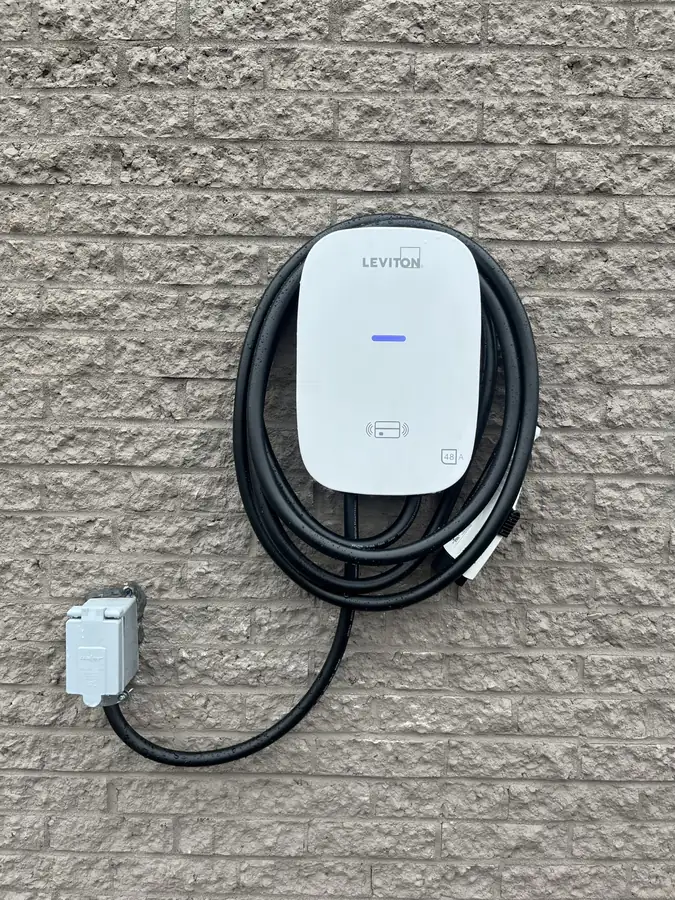
In short: in Québec, choose a Level 2 (240 V) charger that is new and connected, bought from a Canadian retailer and on the Écorecharge list; match its power to your vehicle’s onboard charger and your panel’s capacity; have it installed by a master electrician.
1. Power: no need to aim too high
A charger’s power depends on its current, in amps (A):
- 30 A = 7.2 kW; 40 A = 9.6 kW; 50 A = 12 kW; 80 A = 19.2 kW.
- Most models sold offer 7.2 to 12 kW, often adjustable.
At home, the vehicle’s onboard charger limits AC charging power: a charger more powerful than it accepts will not charge any faster. Check that limit (in kW) in your vehicle’s specifications before you buy.
To estimate charging time, divide the battery capacity (kWh) by the charger’s power (kW). As a rough guide, a vehicle that uses about 18 kWh per 100 km gains around forty kilometres per hour of charging at 7.2 kW. Since most charging happens overnight, moderate power is enough for most households.
2. Connector and cable
- J1772: plug-in hybrids and most electric vehicles.
- NACS: Tesla and recent models from several other manufacturers. An adapter can bridge the two.
- Cable: 6 to 8 metres depending on the model. Measure the distance to your vehicle’s charge port; a cable that is too long or too thick is harder to handle in winter.
3. Winter and certification
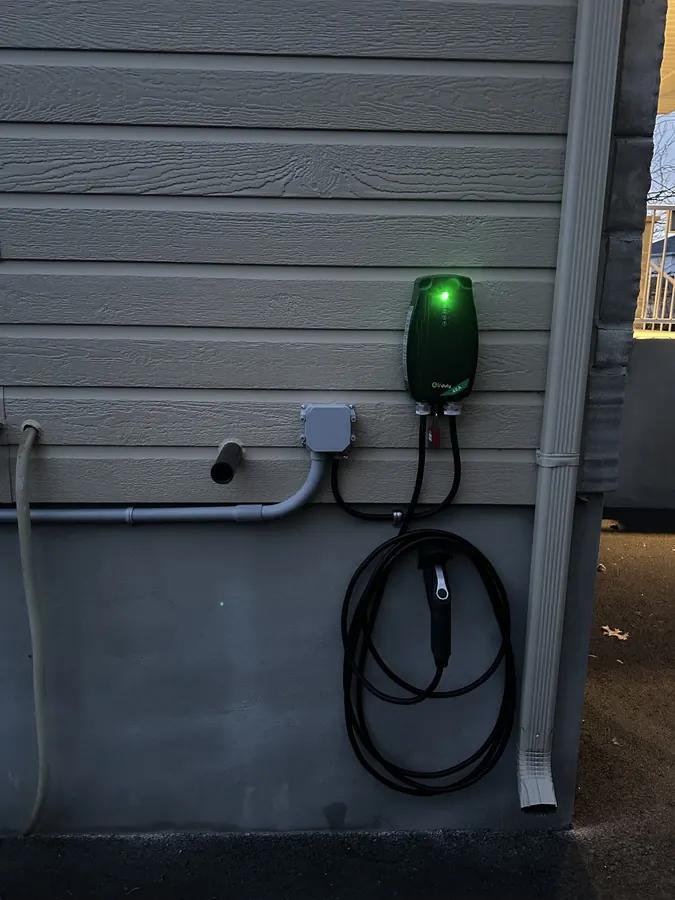
A charger installed outdoors must be designed for outdoor use and the cold: weatherproof enclosure, a cable that stays flexible and a holder to coil it. Every charger sold in Canada must be approved by an accredited certification body: look for the CSA, cUL or cETL mark. Be wary of models bought on foreign websites.
4. Your electrical panel
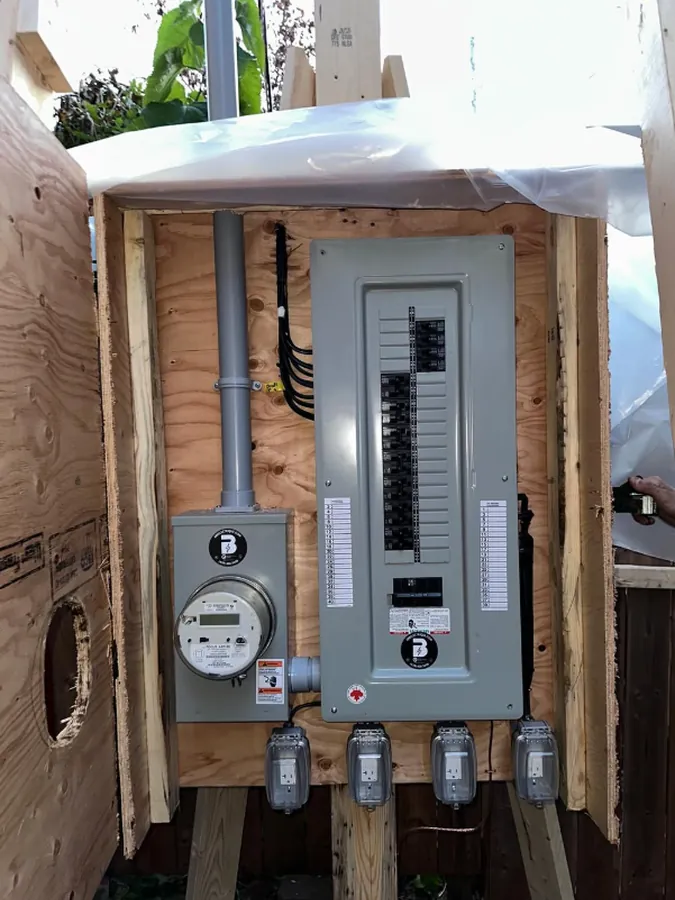
A hardwired charger connects to a dedicated 240 V circuit. Because charging is a continuous load, the circuit is larger than the charger’s current: for example, a 32 A charger needs a 40 A breaker. Before you choose, the master electrician performs a load calculation for your home. If your panel is already heavily loaded (heat pump, spa, heated floors), there are three options:
- set the charger to a lower power;
- install a load management device that reduces charging when the house uses a lot of power;
- as a last resort, upgrade the panel or service entrance (for example from 100 to 200 A).
5. Écorecharge criteria in 2026
For the Écorecharge home charger grant, the charger must:
- be on the list of eligible charging stations;
- be Level 2 (208 or 240 V);
- be connected: since April 1, 2026, only connected chargers are eligible, and the invoice date is what counts;
- be new (used or demo units are not eligible) and bought from a Canadian retailer, or leased for at least 36 months;
- be invoiced in the name of the electric vehicle’s owner.
A connected charger also lets you schedule charging outside peak hours. Some manufacturers and networks even pay 3 to 15 cents per kWh used. For the grant amount and application, read our article EV Charger Grant in 2026.
6. Installation
Electrical work must be done by a licensed electrical contractor. EBE Électrique assesses your panel, helps you choose the location (garage, exterior wall, condo parking), installs the charger and gives you the invoices for your grant application.
Frequently asked questions
Does a 48 A charger charge faster than a 32 A charger?
Only if your vehicle’s onboard charger accepts more than 7.7 kW and your panel allows it. Otherwise, a 32 A charger is enough.
Can I install my charger myself?
No. Connecting to the panel is electrical work that must be done by a licensed electrical contractor, and the invoices are required for the Écorecharge grant.
Is a portable Level 2 charger eligible?
A portable charger plugs into a 240 V outlet (NEMA 14-50 or 6-50) installed by an electrician. Check whether the model is on the Écorecharge list before you buy.
Sources: Choosing a home charging station (Québec.ca, in French) and Eligible home charging stations (Québec.ca, in French). The Écorecharge program criteria take precedence over this summary.