Home Generator: Portable or Standby, and How to Connect It
A multi-hour outage in winter means no heating, no sump pump and no refrigerator. A well-chosen, properly connected generator keeps you safe.
Portable or standby?
- Portable: less expensive, it powers a few essential circuits. You have to bring it out, start it and refuel it yourself.
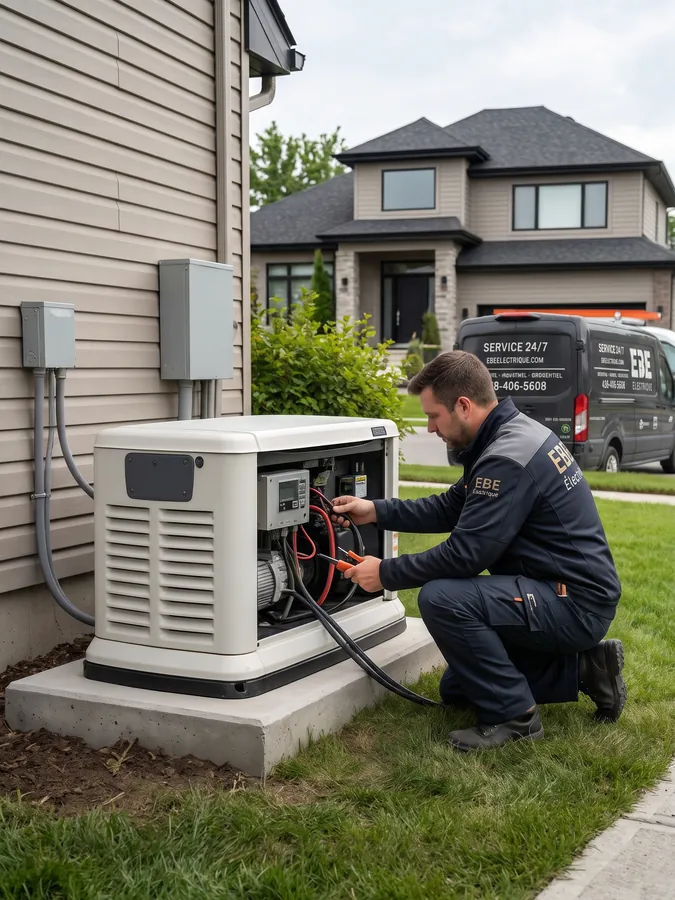
- Standby: permanently installed outdoors, it starts on its own when the power goes out and supplies a larger part of the house.
How much power?
List what you want to keep running: heating, sump pump, refrigerator, freezer, lighting, internet. In Québec, electric heating draws a lot of power, so people often choose a few priority circuits rather than the whole house. We do this calculation with you.
Never into a wall outlet
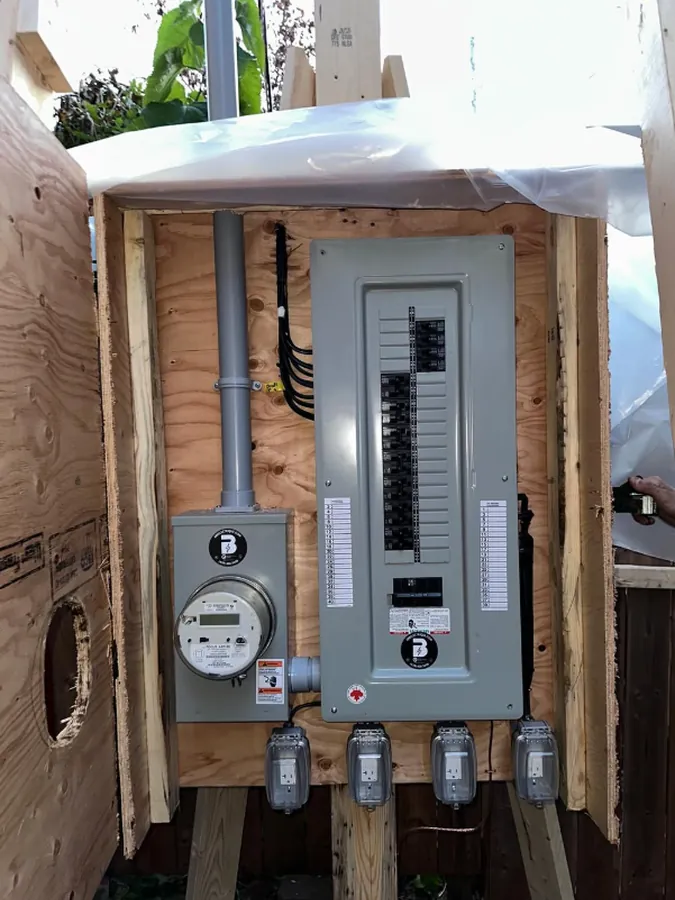
Plugging a generator into a household outlet is dangerous: power can flow back into the grid and electrocute line workers, and it can damage your appliances. The only safe method is a transfer switch (manual or automatic) or an interlock device installed by a master electrician.
Safety and maintenance
- Always outdoors, away from doors and windows: exhaust contains carbon monoxide. Keep a carbon monoxide alarm in the house.
- Run it regularly to make sure it starts.
- Change the oil and use a fuel stabilizer as the manufacturer recommends.
EBE Électrique installs the transfer switch, connects your generator and handles maintenance and testing.